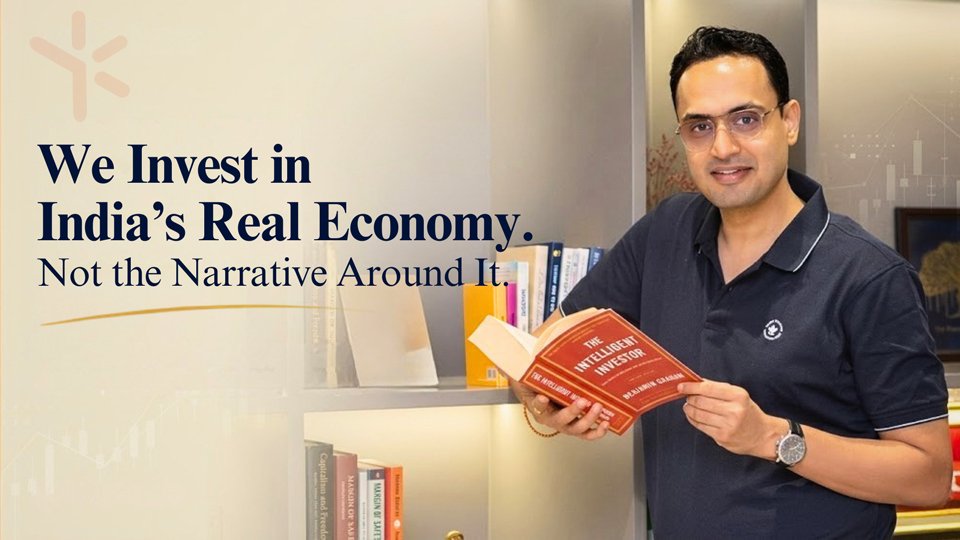
The investment industry has never had a shortage of information.
Financial statements, market reports, sector analyses and valuation models are more accessible than ever before. Yet information alone rarely creates superior investment outcomes.
What often makes the difference is perspective.
Many investors evaluate businesses only after they have reached a stage where their growth story is widely recognised. By then, financial performance is well documented, institutional interest has increased, and much of the market has already formed a view.
We believe the more meaningful work begins much earlier.
It begins with understanding how businesses evolve—how founders make decisions, how governance matures, how capital allocation changes over time, and what separates companies that merely grow from those that create enduring value.
Our experience across India’s SME ecosystem has reinforced one simple observation: businesses rarely transform overnight. The foundations of long-term success are typically laid years before they become visible through financial metrics alone.
That perspective shapes how we evaluate opportunities.
But the quality of the business matters more.
When we evaluate an opportunity, we begin with questions that remain consistent regardless of the industry.
Does the company solve a genuine problem?
Has it demonstrated an ability to grow profitably rather than simply grow quickly?
Does the founder continue to think like an owner?
Is the business generating returns through operational excellence rather than favourable market conditions?
Are there structural trends that can support the business over the next decade rather than only the next few quarters?
These questions do not change simply because a particular sector becomes fashionable.
Markets often reward narratives.
We prefer to understand businesses.
There is an important difference.
Narratives can change quickly.
Economic fundamentals generally change much more slowly.
India today is experiencing several structural shifts that extend across industries. Manufacturing capacity is expanding. Infrastructure investment continues to grow. Supply chains are becoming more diversified. Formalisation is improving business quality. Digital adoption is increasing productivity across enterprises of every size.
These are not sector-specific opportunities.
They are economy-wide transformations.
The businesses that benefit from them may operate in completely different industries, but they often share remarkably similar characteristics.
They are usually founder-led.
They allocate capital with discipline.
They possess specialised capabilities that are difficult to replicate.
They continue strengthening governance as they scale.
Most importantly, they operate in markets where demand is supported by long-term structural changes rather than temporary cycles.
Over time, our portfolio has reflected this philosophy.
The businesses may operate in different sectors, but the reasons they are selected remain remarkably consistent.
Each has demonstrated a proven business model.
Each is led by promoters with meaningful ownership and long-term commitment.
Each operates within an industry supported by enduring economic trends rather than short-lived momentum.
For us, diversification is not about owning many sectors.
It is about identifying high-quality businesses wherever they exist.
Sometimes those businesses happen to be in industries attracting significant attention.
Quite often, they are not.
That is perfectly acceptable.
Investment success does not come from correctly predicting the next popular sector.
It comes from consistently recognising durable businesses before their quality becomes consensus.
India’s economy is becoming broader, deeper and more entrepreneurial every year.
As investors, our responsibility is not to follow narratives.
It is to understand businesses.
Because in the long run, it is businesses—not themes—that create enduring wealth.
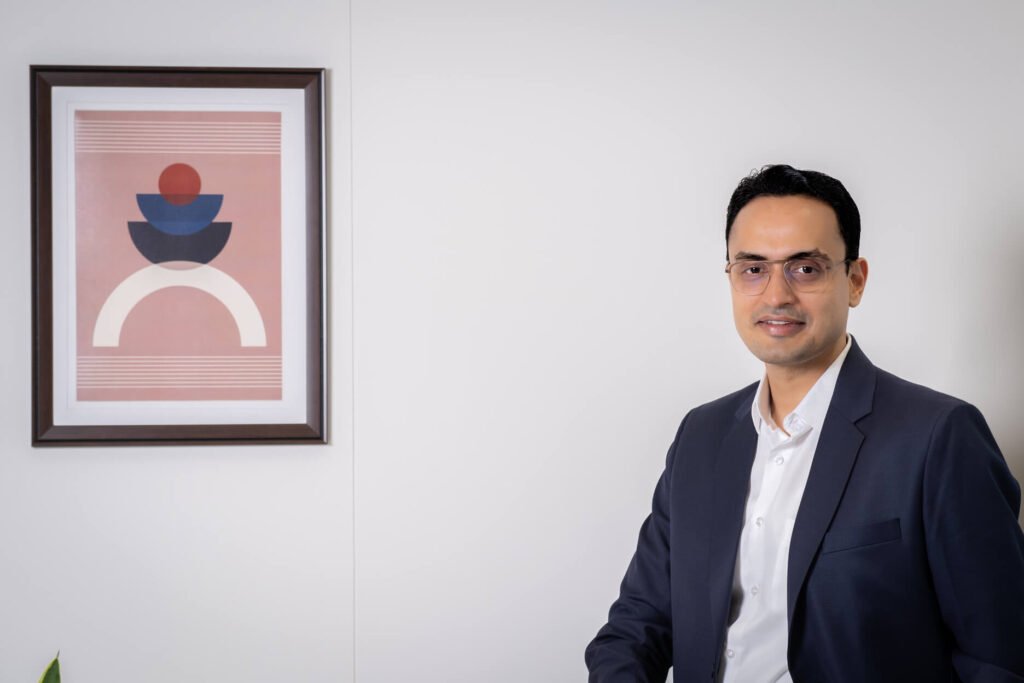
Shrikant Goyal
Director & Fund Manager
Getfive Funds
Looking Beyond Financial Statements
Financial performance is an essential starting point, but it is rarely the complete picture.
A business may demonstrate consistent revenue growth, healthy profitability and a strong balance sheet, yet still face challenges that limit its long-term potential. Equally, another business may possess the right leadership, market positioning and governance mindset while still being in the process of strengthening its internal systems.
Understanding where a company stands on that journey requires looking beyond historical numbers.
It requires evaluating the quality of decision-making, the scalability of operations, the resilience of the business model and the willingness of management to build institutions rather than simply operate businesses.
These factors often determine whether growth can be sustained over many years.
“While it’s tempting to pull back, we believe that companies that double down on growth will not only rebound faster but will also emerge stronger as a result. “