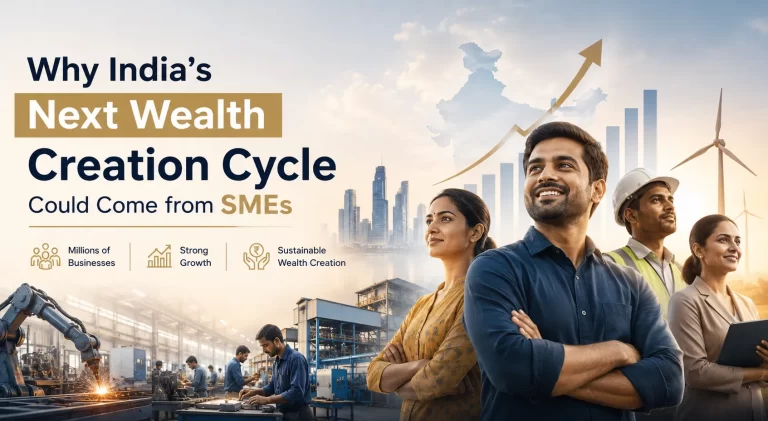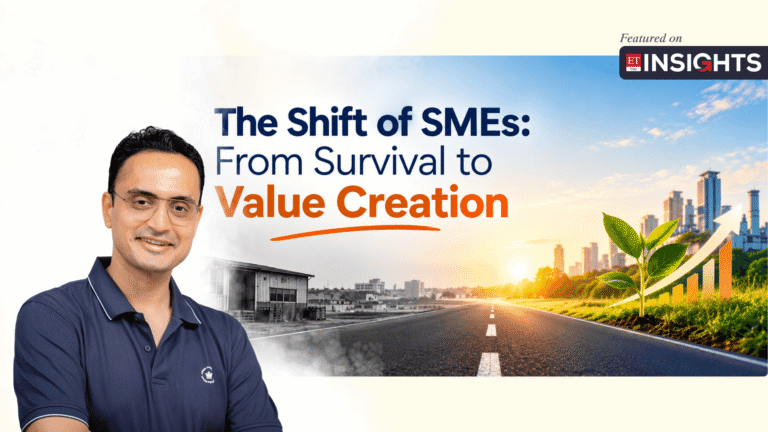
India’s small and medium enterprises have long been called the backbone of the economy, but the more striking story is how quietly they have reinvented themselves. A sector once built around staying off the government’s radar is now actively choosing to be visible, documented and formally valued. Few shifts in India’s economic journey are as encouraging as this one.
The Underground Years (1991–2014): Invisibility as a survival strategy
When India liberalised its economy in 1991, the rules of the game were still being written. Small businesses multiplied rapidly, but most of them operated informally. A tax regime that was fragmented and layered with overlapping levies felt stacked against them, so the rational choice for many owners was to keep operations small and unregistered rather than risk exposure.
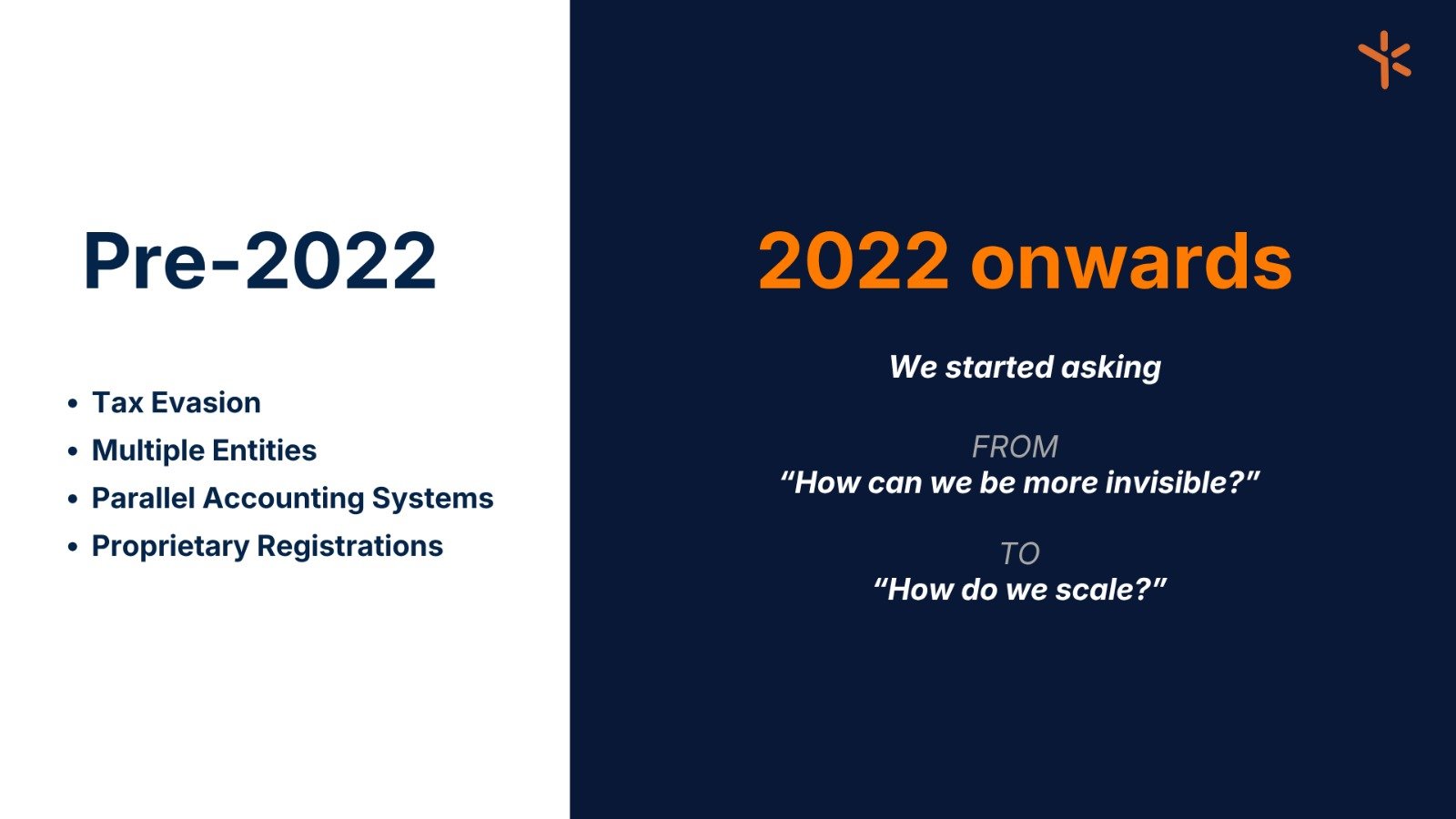
That instinct produced a whole set of workarounds: informal bookkeeping, multiple entities, proprietorship-style registrations, and a heavy reliance on cash. It wasn’t necessarily dishonesty for its own sake — it was businesses adapting to a system that hadn’t been designed with their growth in mind.
Even so, these firms grew. They created jobs, built products, and served their communities. But operating in the shadows came at a cost: banks couldn’t verify their financials, so credit was hard to access; large organised retailers needed documented invoices, so those partnerships stayed out of reach; and with no verifiable track record, favourable credit terms were rarely available. Growth eventually hit an invisible wall. Faced with a choice between staying small but profitable, or going formal and risking everything, most owners chose to stay small.
The Inflection Point: A changed rulebook
The Goods and Services Tax, introduced in July 2017, replaced that fragmented structure with a single, unified system. Digital tools that came with it — e-way bills, automated invoicing, and input tax credits — rewarded businesses for operating transparently. The economics of formalisation flipped: lower costs, easier supplier relationships, stronger margins and access to a better class of customer all became achievable by going legitimate.
Having experienced the upside of formalisation firsthand, many SMEs made their peace with a system they had once viewed as an adversary.
Around the same period, the government widened access to formal credit through the Pradhan Mantri Mudra Yojana. By April 2026, the scheme had disbursed more than ₹40 lakh crore across over 52 crore loans. The next major shift came when capital markets themselves opened their doors to SMEs.
Platforms such as the NSE Emerge and the BSE SME exchange let smaller, agile companies list within six to nine months, compared with the twelve to eighteen months typically needed on the main board. That compressed timeline made it realistic for well-run SMEs to scale year after year — and for genuine value creation to follow.
A New Question: Not ‘how do we hide?’ but ‘how do we build?’
The conversation inside the SME sector has changed. Owners are now asking how to build businesses that last and scale, rather than how to stay under the radar. That mindset shift shows up in the numbers too: SMEs are adopting e-commerce, investing in digital infrastructure and experimenting with data analytics. Roughly 20.5% of registered MSMEs are now women-owned, contributing close to 18.73% of total employment in the sector, and a growing number of young entrepreneurs are entering the space because they see genuine opportunity rather than just a way to get by. It marks a real departure from the defensive, stay-invisible mindset of the past.
Aditya Vision: A case study in transformation
Aditya Vision Limited illustrates this shift concretely. Founded in 1999 in Patna as a single retail outlet, the company has grown into a chain of more than 150 stores spread across Bihar, Jharkhand, Uttar Pradesh and Chhattisgarh. Notably, it has never shut a single store across more than 25 years of operation.
Between 2018 and 2023, the company expanded from 28 to over 105 stores while remaining consistently profitable. Revenue grew at over 30% annually, and gross margins improved from around 8.5% to 16% — a clear illustration of how scale, when managed well, translates into stronger profitability.
Strategically, Aditya Vision has focused on underserved markets in Bihar and eastern India, where organised retail competition remains thin. Its approach is straightforward: competitively priced, quality products backed by strong after-sales service — the kind of consistency that builds trust, and trust that becomes a durable competitive moat. The company went on to become the first consumer electronics retailer to list on the BSE SME Exchange, a milestone that would have been unthinkable within the old, informal SME ecosystem.
Its market capitalisation has grown from roughly ₹22 crore at listing in 2017 to approximately ₹7,700 crore as of 4 September 2026.
What the data shows
The broader numbers tell a similar story. India’s MSME sector now accounts for 31.1% of GDP, 35.4% of manufacturing output, and close to 48.6% of exports. Udyam registrations had crossed 8.7 crore by June 2026, and the sector supports over 38.9 crore jobs — making it the country’s largest source of employment after agriculture.
These enterprises are increasingly part of formal, organised and global commerce, and that represents a genuine structural change.
Even tighter regulation is a sign of a maturing market: SEBI has raised entry barriers for SME listings, signalling that regulators are now holding this segment to a higher standard. Investors, in turn, are looking for professionally run, profitable companies rather than shell entities chasing a quick exit — and many increasingly see the SME segment as a genuine avenue for long-term value creation, given the room these businesses still have to grow.